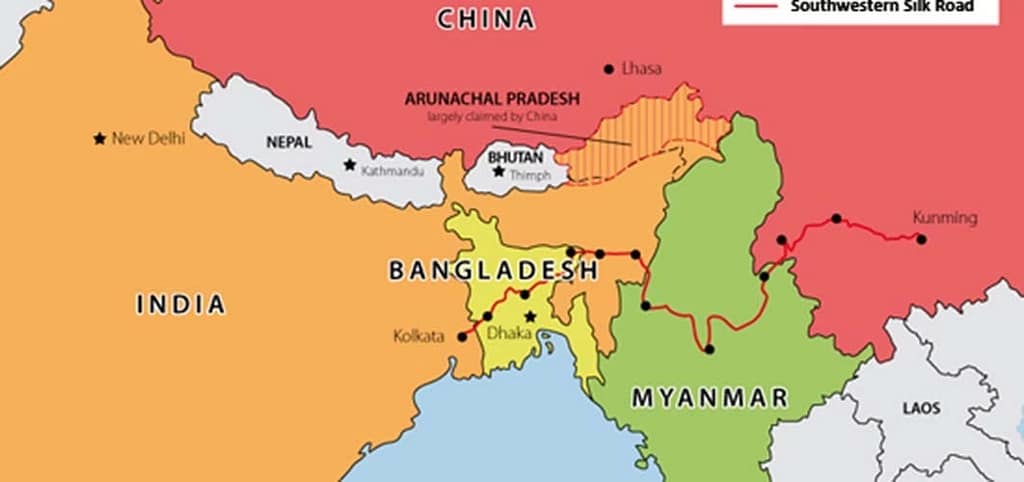
The year 2025 has seen Bangladesh transform from a developing nation into a frontier state—a buffer zone where major powers compete for influence—on the global geopolitical chessboard. The Ukraine-ization of Bangladesh is no longer a metaphor; it is a reality where the country is being used as a theater for the escalating rivalry between the United States, China, and India. By late December 2025, it is clear that the more the interim government relies on foreign condolences and aid packages, the less sovereign it becomes.
The United States has played an unusually active role in the post-revolutionary landscape. The US Embassy’s official tweet offering formal condolences for Sharif Osman Hadi—a non-state actor with a history of radical rhetoric—was a clear signal to New Delhi and Beijing . Washington is prioritizing its Indo-Pacific Strategy, which requires a Bangladesh that is no longer aligned with both India and China. By validating the new forces of the 2024 revolution, the US hopes to secure maritime access in the Bay of Bengal and a listening post near China’s border. However, as seen in Ukraine, when a smaller nation becomes a bulwark for a superpower, it often ends up as the primary battlefield.
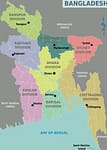
While Washington actively courts the new order, China’s response has been markedly different. Beijing has adopted a posture of calculated retreat. While it continues to monitor its Belt and Road investments, China has begun exploring ties with regional factions inside Bangladesh. If the central government in Dhaka becomes increasingly dependent on US interests, Beijing may decide that a fragmented Bangladesh is more manageable than a US-aligned one . This raises the genuine specter of Balkanization. Regional fault lines are already visible: the Chittagong Hill Tracts have long resisted Bengali domination, with indigenous communities demanding autonomy, while Noakhali has emerged as a stronghold of religious extremism that openly challenges Dhaka’s secular establishment . As these regional resentments deepen and the central government remains captive to foreign aid and radical mobs, the country may find itself destroyed not by a foreign army, but by the crushing weight of serving as a pawn.
This external manipulation finds its domestic counterpart in what can be called the Chaos Loop. The ruling elite, led by Dr. Muhammad Yunus, are using the street as a bargaining chip. They tell Washington they need money to stop the radicals, while they tell the radicals they are the only ones who can keep India at bay. This strategy of managing the mob is exactly what led Pakistan into its current state of failure, where the elite-military-radical triangle ultimately paralyzed the state itself . When the state stops being the protector of its people and starts being a broker for foreign interests, the institutions of the state begin to rot. The judiciary is paralyzed, and the military is increasingly divided between those who want to restore order and those who fear the street.
Bangladesh’s future, as viewed from December 20, 2025, is a lonely road. Unlike 1971, where there was a clear global consensus for its birth, the February 2026 transition is fraught with suspicion. If the country becomes a platform for the US-China rivalry, it will be the common people who suffer the Ukrainian fate: a destroyed economy, a polarized society, and a homeland that is no longer their own . The tragedy is that the national mindset of vandalization and protest, which the elites are currently exploiting, provides the perfect cover for this external dismantling. Bangladesh is not being conquered; it is being hollowed out from the inside.