As 2025 draws to a close, Bangladesh finds itself in a paradoxical state: while the streets are filled with “India Out” slogans, the national economy is more dependent on Indian stability than ever before. The surge in anti-India sentiment, catalyzed by the death of Sharif Osman Hadi and the perceived Indian support for the previous regime, has pushed Bangladesh toward a “structural strangulation” .
The economic math is cold and unforgiving. Bangladesh relies on India for over 15% of its national power grid. In a climate of load-shedding and energy shortages, any total breakdown in these agreements would paralyze the industrial heartland of Gazipur and Narayanganj. Furthermore, the $50-billion Garment (RMG) sector—the lifeblood of the nation—is built on Indian cotton, yarn, and dyes. Sourcing these materials from China or the West adds 20–30% in logistics costs and weeks in transit time. In a global market where Vietnam is already outperforming Bangladesh, these “sovereignty costs” could lead to the collapse of the industry that employs millions .
Economic vulnerability, however, is only one dimension of Bangladesh’s precarious position. India’s response to Bangladesh’s radicalization has been measured but strategically decisive. According to regional security assessments, as of December 19, 2025, the Indian Army is fortifying a “protective arc” around the Siliguri Corridor, with reports indicating exploration of a fourth major base in Mizoram to complement new installations in West Bengal, Bihar, and Assam . For New Delhi, a radicalized Bangladesh is an existential threat to its “Seven Sisters.” If the Dhaka government cannot stop cross-border militancy, India has signaled that it will utilize its “Dynamic Response Strategy”—surgical strikes and “limited war” doctrines that ignore the central government’s protests. This is particularly significant given that India played a decisive role in Bangladesh’s 1971 Liberation War; the current rupture marks a dramatic reversal of that historical partnership.
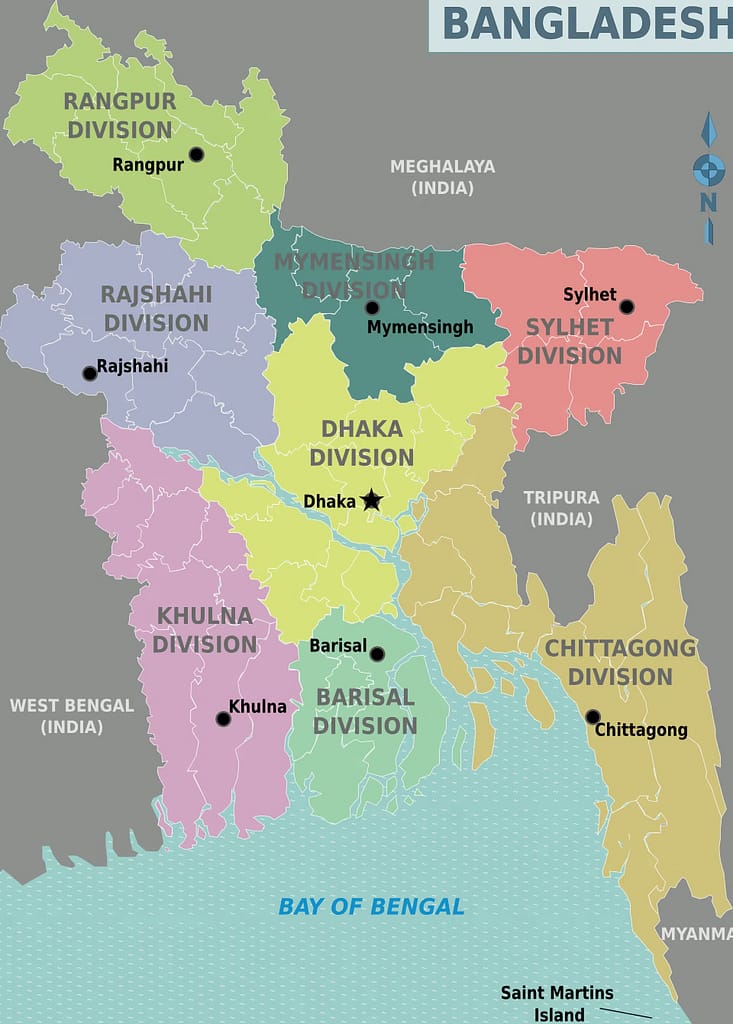
The common misconception in Dhaka is that China or Pakistan can replace India’s role. However, Pakistan itself faces severe economic distress, unable to secure basic food imports for its own population or avoid repeated IMF bailouts . China’s support, meanwhile, typically comes in the form of high-interest infrastructure loans—as seen in projects like the Padma Bridge and Payra Port—rather than the low-cost daily trade of food and energy that India provides. When onion and egg imports from India were briefly slowed in 2025, prices in Dhaka markets spiked by 50% in days. Neither Beijing nor Islamabad can replicate this immediate, essential flow of commodities .
Ultimately, the “India Out” movement is a form of geopolitical suicide. By turning the neighborhood’s largest military and economic power into an enemy, the interim government is gambling with the country’s basic survival. If the 1996 Ganges Water Treaty is not renewed under a conducive environment in 2026, the northern districts of Bangladesh will face permanent desertification . For a delta nation, water is life. By alienating the upstream power, Bangladesh is effectively signing its own death warrant in the name of a radicalized street narrative.