
Introduction
After examining capital leakage, bank risk mechanics, inter-state comparisons, and district-level gaps, the conclusion is unavoidable:
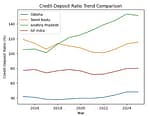
Odisha’s low Credit–Deposit (CD) ratio is not inevitable.
A CD ratio of 65% by 2030 is realistic — not aggressive — if credit absorption is treated as a core economic objective rather than a by-product of deposits.
Using banking practices aligned with guidelines and datasets published by the Reserve Bank of India, this article lays out a practical, low-risk roadmap for Odisha to retain and attract bank credit without compromising financial stability.
Why 65% Is the Right Target
A 65% CD ratio would mean:
- Most local savings are reinvested locally
- MSMEs gain consistent access to finance
- Private investment complements government spending
It does not require reckless lending or unsustainable credit expansion. Several states with similar income levels have already crossed this threshold.
Step 1: Make Credit Deployment a Governance KPI
What gets measured gets fixed.
Odisha should move from annual reviews to monthly monitoring.
What to Track
- District-wise CD ratio
- Sector-wise credit growth
- Bank-wise lending performance
- Priority Sector Lending (PSL) gaps
Why It Works
States that publish granular credit dashboards:
- Identify problem districts early
- Apply targeted interventions
- Create accountability for banks and administrators
Credit must be treated like infrastructure — continuously monitored.
Step 2: Build MSME Credit Readiness at Scale
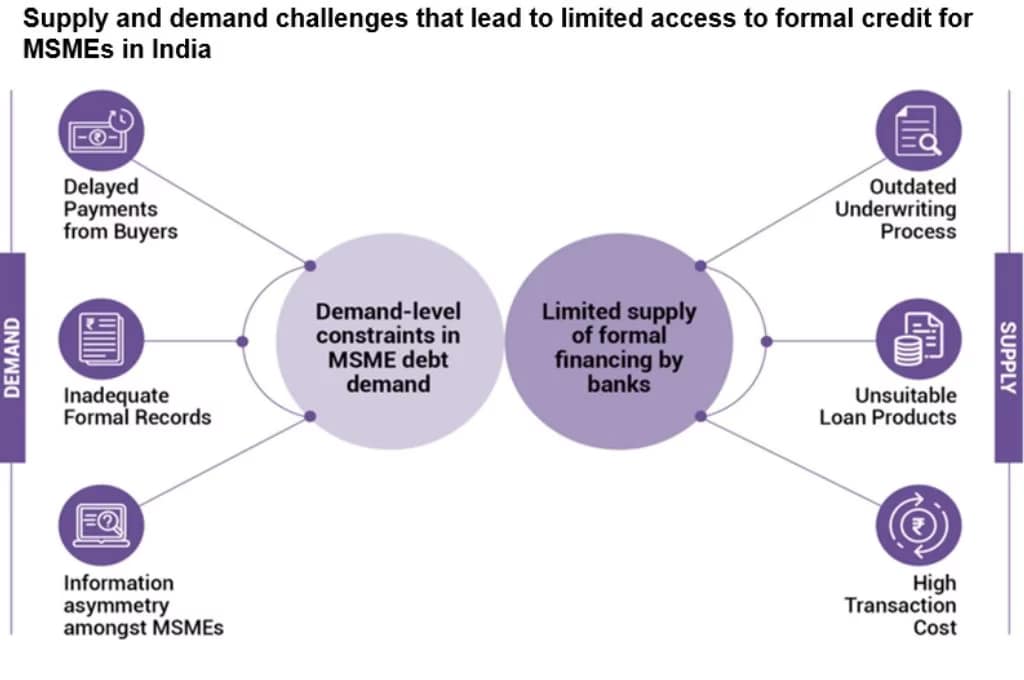
Most credit fails before appraisal begins.
Odisha should invest in making enterprises bank-ready.
Priority Actions
- State-supported accounting digitisation
- GST stabilisation assistance
- Standardised financial statement templates
- Credit history formalisation
This reduces appraisal costs for banks and increases approval speed.
Banks lend more when evaluation becomes repeatable.
Step 3: Share Risk With Banks (Strategically)
High CD states actively reduce downside risk.
Odisha should deploy:
- State-backed credit guarantee funds
- First-loss default protection for MSME loans
- Partial risk coverage for manufacturing and exports
Why This Matters
Even modest risk-sharing:
- Expands lending to new borrowers
- Increases loan ticket sizes
- Improves credit flow to underserved districts
Banks respond quickly when downside is capped.
Step 4: Shift From Mega Projects to Credit-Deep Ecosystems
Large projects generate deposits, not widespread credit demand.
Odisha must prioritise:
- Downstream manufacturing
- MSME supplier networks
- Logistics and port-linked services
- Export-oriented clusters
Credit follows complex value chains, not raw extraction.
Step 5: District-Level Credit Engineering
A state average hides local failures.
Each district should have:
- A target CD ratio
- Identified priority sectors
- Dedicated credit facilitation teams
Districts below threshold should trigger:
- Bank-level escalation
- Policy support
- Infrastructure alignment
Balanced growth requires geographic precision.
Step 6: Enforce Bank Accountability (Without Hostility)
Banks respond to incentives, not instructions.
Odisha can:
- Track bank-wise CD ratios
- Monitor PSL shortfalls
- Align government business with lending performance
This is standard practice in high-performing states.
Accountability does not mean coercion — it means clear expectations.
What Success Looks Like by 2030
If executed consistently, Odisha could achieve:
| Indicator | 2025 | 2030 Target |
|---|---|---|
| CD Ratio | ~48% | 65%+ |
| MSME Credit Growth | Low | 2× |
| Manufacturing Credit Share | Limited | Expanded |
| Districts >60% CD | Few | Majority |
This would fundamentally change Odisha’s growth trajectory.
The Strategic Shift Odisha Must Make
From:
“We mobilise deposits well”
To:
“We absorb capital efficiently”
Until this shift happens, Odisha will remain a capital donor to faster-growing states.
Final Takeaway
Odisha does not need more slogans, summits, or MoUs.
It needs:
- Bank-ready enterprises
- Predictable project execution
- Shared risk frameworks
- District-level accountability
Fix these — and the Credit–Deposit ratio will correct itself.
This series is not criticism.
It is a blueprint for financial self-reliance.