
Introduction
Some Indian states don’t just retain their bank deposits — they absorb more credit than they generate.
States like Andhra Pradesh and Tamil Nadu regularly post Credit–Deposit (CD) ratios above 100%, meaning banks lend more money within these states than they collect there. Capital flows into these economies.
Odisha, by contrast, remains a capital-exporting state.
Using official banking trends and frameworks overseen by the Reserve Bank of India, this article explains how high-performing states engineered strong credit absorption — and why Odisha has not yet done the same.
What Does a 100%+ Credit–Deposit Ratio Actually Mean?
A CD ratio above 100% signals:
- Strong demand for bank credit
- High project readiness
- Low perceived lending risk
- Capital inflows from other regions
This is not accidental.
It reflects institutional maturity, not just industrial scale.
Banks do not “favour” these states. They respond to predictable lending environments.
The Southern States’ Credit Playbook
Southern states did not stumble into high CD ratios. They built systems that make lending efficient and repeatable.
Let’s examine what they do differently.
1. Aggressive Risk Sharing With Banks
High-performing states actively reduce downside risk for lenders.
They use:
- Credit guarantee funds
- First-loss default protection
- Interest subvention for priority sectors
These mechanisms:
- Lower effective credit risk
- Encourage lending to MSMEs
- Increase ticket sizes and loan tenures
Odisha’s limited use of such instruments forces banks to bear full exposure, making them conservative by design.
2. Dense Industrial and MSME Clusters
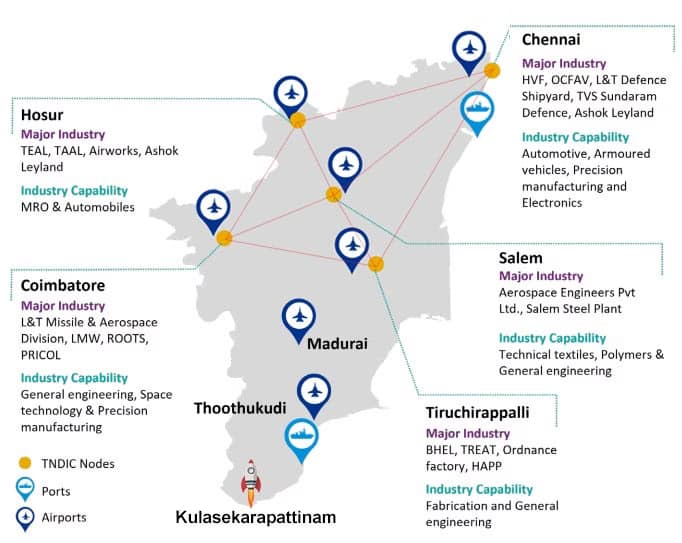
Tamil Nadu and Andhra Pradesh developed cluster-based economies:
- Auto components
- Textiles and garments
- Electronics and engineering goods
- Food processing and exports
Clusters matter because:
- Banks understand the business models
- Supply chains are visible
- Peer benchmarking reduces appraisal cost
Odisha has resources, but fewer credit-ready clusters.
3. Formal MSME Ecosystems
High CD states invested early in:
- Digital accounting adoption
- Stable GST compliance
- Export documentation readiness
- Vendor financing networks
As a result:
- MSMEs look “bankable” on paper
- Credit scoring becomes faster
- Defaults are easier to predict and manage
Banks lend to systems, not isolated firms.
4. Faster Project Execution Cycles
In lending-friendly states:
- Land acquisition is time-bound
- Clearances follow defined timelines
- Industrial estates are plug-and-play
Predictability reduces:
- Cost overruns
- Interest during construction
- Repayment uncertainty
Odisha’s execution delays increase risk premiums — even when projects are viable.
5. Institutionalised Credit Monitoring
High CD states treat credit as an economic KPI.
They track:
- District-wise CD ratios
- Sector-wise credit flow
- Bank-wise lending performance
Low-performing banks are flagged.
High-performing banks are rewarded with government business.
Odisha reviews CD data — but rarely acts on it systematically.
Why Odisha Falls Short (Structurally)
Odisha’s industrial focus has historically prioritised:
- Large extractive industries
- Mega projects
- MoUs over execution
This approach:
- Generates deposits
- Attracts headline investment
- Does not create widespread credit demand
Without strong downstream manufacturing and MSME depth, credit absorption remains limited.
The Cost of Not Absorbing Credit
When states fail to attract bank credit:
- Job creation shifts elsewhere
- Industrial value chains remain shallow
- Growth depends on government capex
- Local entrepreneurship stagnates
Capital-intensive growth without credit depth is fragile.
What Odisha Can Realistically Learn
Odisha does not need to replicate southern states wholesale. But it must adopt their core principles:
- De-risk lending through guarantees
- Build industrial clusters, not isolated units
- Formalise MSMEs at scale
- Treat credit deployment as governance
High CD ratios are engineered outcomes, not geographical privileges.
The Key Insight
Southern states did not wait for banks to lend more.
They made it easy for banks to say yes.
Until Odisha does the same, its deposits will continue to finance growth elsewhere.
👉 In Part 4, we zoom in further — analysing district-level credit patterns inside Odisha and why some regions get loans while others don’t.