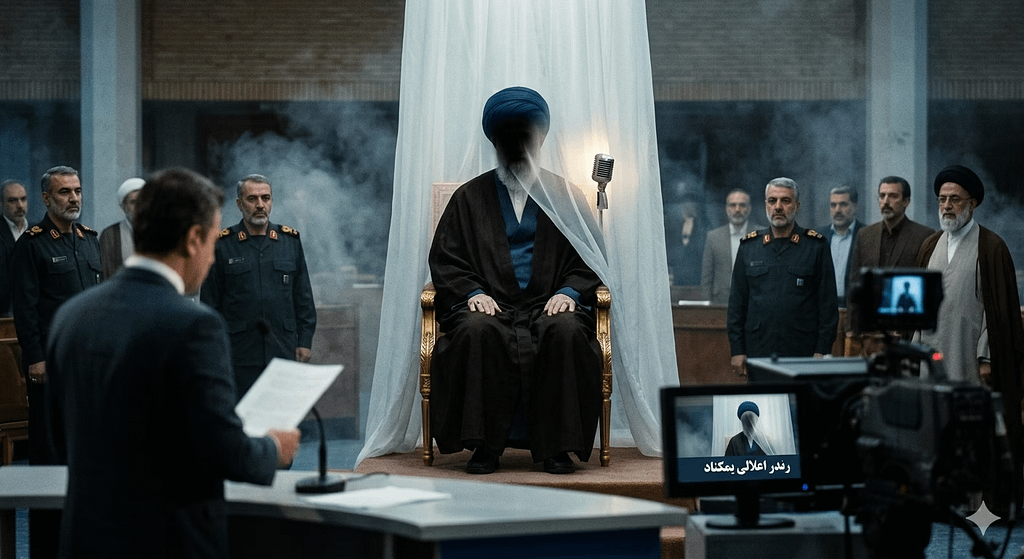

Is Mojtaba Khamenei dead, in a coma, or surviving in a vegetative state? This is the question haunting global intelligence circles and the Iranian public alike as the weeks pass without a single confirmed public appearance from the man named as the new Supreme Leader. Since the devastating February 28th strikes that claimed his father’s life, Mojtaba has vanished from the physical world, replaced entirely by a carefully managed digital and media ghost. While state officials insist he is in “excellent health,” the absolute lack of video or even a simple audio recording suggests a much darker reality. In an age where a leader can prove their vitality with a thirty-second smartphone clip, the decision to have a news anchor read his first major address over a static photograph is a glaring admission of incapacity.
The mystery of his physical state is compounded by a blatant disregard for the Islamic Republic’s own constitutional mandates. According to the established process, the Supreme Leader must be a high-ranking cleric—an Ayatollah—with recognized religious authority. Mojtaba Khamenei simply does not qualify. However, in the desperate fog of war, extraordinary measures often replace ordinary laws. It is highly likely that the IRGC did not simply install Mojtaba unilaterally, but rather sat down with the high-ranking Ayatollahs and convinced them to accept a “wartime installation.” In this scenario, the religious elite may have agreed to a temporary suspension of the rules, viewing Mojtaba as a necessary placeholder to maintain the appearance of the Khamenei lineage and prevent a fractured leadership while the country is under fire.
The present Ayatollahs likely conceded to this arrangement because they are aware of Mojtaba’s true condition. By installing a man they know cannot last long due to his incapacitated state, the clergy avoids an immediate, violent confrontation with the military. They are essentially betting that nature—or the severity of his injuries—will eventually solve the problem for them. This “consensus of convenience” allows the IRGC to achieve its own strategic goals: a silent leader who stops the fierce competition for the top post among other ambitious clerics, freezing the political landscape during the national emergency. It allows the military apparatus to bypass the bureaucracy of a functional leader and issue “divine” decrees and war plans in the name of a man who cannot argue or intervene. The IRGC essentially becomes the voice of a silent god.
This explains why the world only sees news anchors and still photos; if Mojtaba were functional, even a wounded veteran would surely speak to his people to boost morale. Trump’s recent public skepticism, suggesting the leader is “either dead or in bad shape,” mirrors the logic of anyone watching the televised silence from Tehran. The ultimate question remains what happens when the smoke of the current conflict clears. If the regime survives, the “temporary” pact between the clerics and the IRGC will reach a breaking point. Will the Ayatollahs demand a return to a legitimate, religiously qualified Supreme Leader, or will the IRGC chief finally cast aside the clerical veneer and formally take the post? There is, of course, a third possibility: that Iran faces a total military defeat. In that case, the structure of both the Supreme Leader and the IRGC may collapse entirely, clearing the path for a democratic setup to take over the ruins of the old system. For now, the “Ghost Leader” remains a shield for a military junta that is governing by proxy, leaving the world to wonder if they are following the orders of a man or the ghost of a regime.